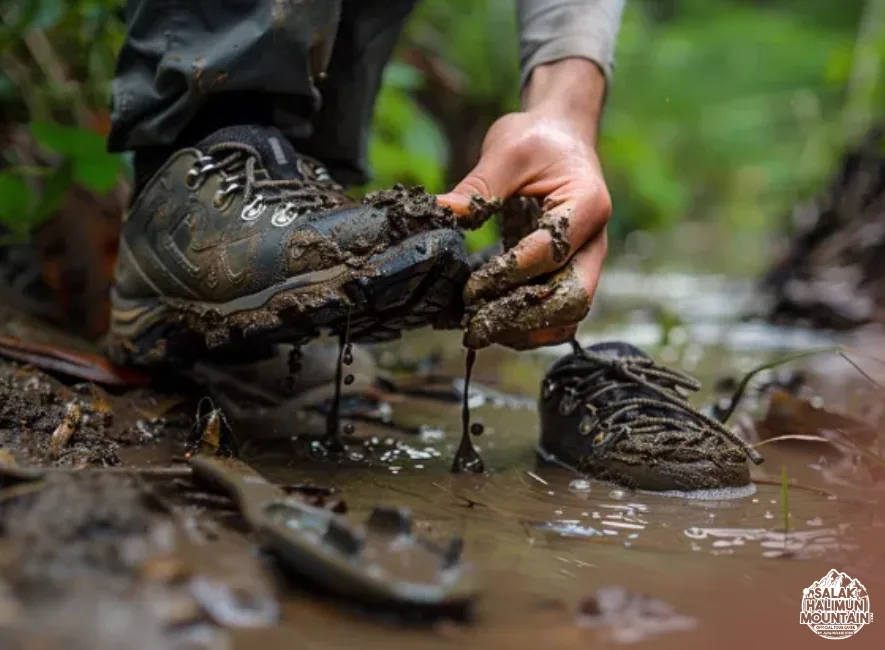
salakhalimunmountain.com – The first thing many visitors notice on Mount Salak is not the height, the mist, or even the towering trees. It’s the ground beneath their boots. Soft. Wet. Unapologetically muddy.
At first, the mud can feel like an inconvenience — something to step around, something that slows you down. But as you move deeper into the rainforest of Mount Salak and Mount Halimun, you begin to understand an important truth known by locals, guides, and seasoned trekkers alike: getting muddy is not a problem here. It is the experience. This mountain does not invite speed. It asks for presence. And the mud is one of its most honest teachers.
The Rainforest That Never Fully Dries
A Living, Breathing Tropical Ecosystem
Mount Salak sits within the Halimun–Salak National Park, one of Java’s last remaining lowland-to-montane rainforest ecosystems. This is not a forest that dries out neatly after rain. The dense canopy above traps moisture, filters sunlight, and keeps the forest floor damp throughout the year. Even on days without rainfall, yesterday’s rain lingers.
Water clings to moss-covered rocks. Leaves drip slowly long after the clouds have moved on. The soil — rich with volcanic minerals and decomposing organic matter — stays soft, dark, and alive. Mud here is not just wet dirt. It is evidence of fertility, a sign that the forest is actively recycling life.
Why Mud Is Inevitable on Mount Salak Trails
Frequent Rain Is Part of the Rhythm
Rain is not an interruption in Salak–Halimun. It is a rhythm. Short afternoon showers, sudden misty drizzles, and long steady rainfall shape the trails day after day. The volcanic soil absorbs water quickly, then releases it slowly, creating slick surfaces and deep, soft patches along trekking routes.
Streams overflow gently, sometimes crossing paths where no bridge exists. What was dry ground in the morning may be ankle-deep mud by afternoon. And that’s normal.
The Volcanic Soil Beneath Your Feet
Mount Salak’s trails are carved through ancient volcanic ground. Unlike compacted gravel paths found in heavily developed hiking areas, Salak’s soil remains loose and organic.
Tree roots snake across the path, polished smooth by years of moisture. Fallen leaves decay into dark, spongy earth. Beneath it all, volcanic stone waits just below the surface — slick, uneven, and unpredictable. The result is a trail that requires attention, not speed.
Mud That Forces You to Slow Down
No Rushing Allowed
On Mount Salak, mud acts as a natural regulator. It slows every step, asking you to place your feet carefully, to test the ground before committing your weight.
You reach for tree roots. You lean into walking sticks. You pause — often — to regain balance. This enforced slowness becomes a gift.
Without realizing it, your breathing steadies. Your awareness sharpens. You stop thinking about distance and start noticing details: the pattern of moss on a fallen log, the sound of hidden water moving underground, the way mist curls around ferns at knee height. Mud teaches patience in a way no signpost ever could.
The Sensory Experience of Getting Muddy
Touch, Smell, Sound, and Sight
Mud engages all the senses. Your boots sink slightly with each step, creating a soft suction sound. Wet earth releases a deep, mineral-rich scent mixed with decaying leaves and rain-soaked wood. Cicadas hum in the background, their rhythm occasionally interrupted by the rush of a nearby stream.
When you slip — and most people do at least once — your hands meet cool, damp soil. It’s grounding, literally. You are no longer observing the forest from above it. You are part of it.
Light filters through the canopy in thin green beams, reflecting off wet surfaces and turning the trail into a living, shifting mosaic.
Slippery Roots and the Art of Mindful Movement
Turning a Hike Into a Conversation With the Forest
Muddy trails demand communication. You read the terrain. You respond to its changes. You learn quickly which roots are stable and which are slick with algae.
This kind of movement turns trekking into a dialogue rather than a conquest. The mountain sets the terms, and you adapt.
Every careful step becomes a small act of respect. For many trekkers, this is where Mount Salak begins to feel less like a destination and more like a teacher.
Mud as a Symbol of Life and Renewal
Decomposition Is Not Decay Here
In tropical rainforests, mud is inseparable from life. Leaves fall, break down, and become soil. Fallen trees return to the ground as nutrients. Microorganisms thrive in the damp earth, feeding insects, birds, and mammals higher up the chain. The mud you step into is the result of countless cycles of growth, death, and renewal.
To walk through it is to walk through time — through processes that have sustained this forest long before humans arrived. Seen this way, mud is not something to avoid. It is something to honor.
A Spiritual Reset Hidden in the Slowness
Presence Over Performance
Many visitors come to Mount Salak carrying the pace of the city with them. Schedules, goals, summit times. Mud gently dismantles those expectations.
You cannot rush through Salak’s rainforest. The ground will not allow it. And once you surrender to that reality, something shifts. Your focus moves inward. Your thoughts slow. Your senses widen.
This is why so many people describe trekking here as grounding, cleansing, or even meditative. The physical challenge of navigating muddy terrain pulls you fully into the present moment. There is no space for distraction when every step matters.
What Getting Muddy Means for Your Hike
Embracing the Challenge
Deep mud, slippery inclines, and river crossings are not exceptions on Mount Salak — they are part of the landscape.
Some sections may reach ankle or knee depth after rain. Steep slopes require steady balance and teamwork. Trails may change shape from one season to the next.
These challenges test stamina, coordination, and patience. But they also build confidence and trust — in yourself, in your guide, and in the forest.
Preparation Makes the Difference
Getting muddy doesn’t mean being careless. Good grip hiking boots are essential. Lightweight, quick-drying clothing helps you stay comfortable. Trekking poles provide extra stability on slick sections.
Just as important is mental preparation: understanding that mud is not a failure of the trail, but a feature of it.
Why Locals Respect the Mud
Local guides and communities around Mount Salak understand the forest through lived experience. They know which trails become challenging after rain, where water flows beneath the ground, and how to move safely through muddy sections.
For them, mud is familiar — a sign that the forest is healthy and functioning as it should. Walking beside them, you learn not just how to navigate the terrain, but how to read the forest’s moods.
Responsible Trekking in Muddy Conditions
Muddy trails are more vulnerable to damage if treated carelessly. Responsible trekking means staying on established paths, avoiding unnecessary shortcuts that cause erosion, and following your guide’s instructions.
Slow movement protects both you and the forest. By respecting muddy terrain rather than fighting it, you help preserve the trails for future visitors and for the wildlife that depends on them.
More Than Dirty Boots
At the end of a Mount Salak trek, your boots will be dirty. Your clothes may carry the scent of wet earth. Your legs will feel the effort.
But what you take home goes deeper. You carry the memory of moving at the forest’s pace. Of listening instead of rushing. Of allowing the mountain to shape your journey.
Getting muddy at Mount Salak is not about discomfort. It is about connection — to the land, to yourself, and to the living rainforest that still thrives here. And once you understand that, the mud stops feeling like an obstacle and starts feeling like an invitation.
So, if you’re ready to explore the wonders of Mount Salak Halimun, head over to our ONLINE BOOKING PAGE and let’s start planning your adventure. Or simply CLICK THIS LINK to chat with us on WhatsApp.
With our team, you’re not just getting a guide; you’re gaining a local friend who will ensure your trip is nothing short of extraordinary.